Open Source Software
OSS in ag

Analysis
💡Key takeaway: Open source software is a fantastic community led movement. More often than not, open source software is related to the creating tools and capabilities used to build applications.
Open source software and the open source movement has been around for more than two decades. There are many examples of excellent, and effective open source software like Linux (operating system), Python & PHP (programming language), and PyTorch (Machine learning framework). Almost any technology product you use today will have some amount of open source software used in the development of that product.
There have been fewer applications in AgTech, even though a few of the underlying capabilities have been using open source software. For example, ESA offers the Sentinel 2 Toolbox, an open source software product, for the visualization, analysis, and processing of GMLJP2 files/Sentinel-2 data and other high-resolution remote sensing data. If the community of developers supporting the open source software are active, and engaged, there are many benefits like reduced acquisition costs, transparency, availability, sustainability, and security, though support and service levels are not guaranteed. There are quite a few open source initiatives in agriculture, and Tim Hammerich’s podcast delved into a few of them recently. GPS mapping, precise equipment control, and open source weed control technology are some examples of recent open source initiatives.
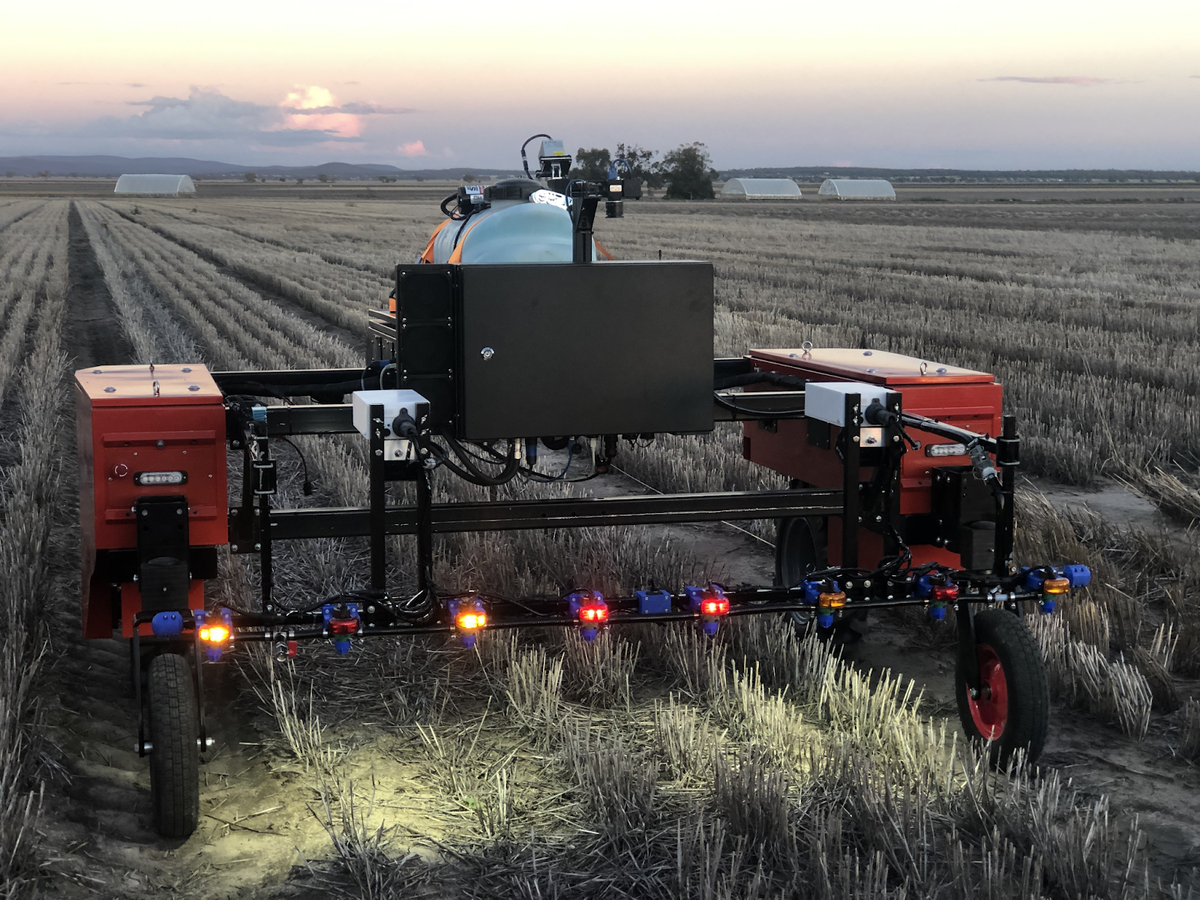
The open weed locator (OWL) project is a community driven project to crowdsource weed imagery and to provide instructions and tools to do site specific weed treatments. The OWL and the Weed AI project from the University of Sydney creates a standard structure to capture weed images. For example, the Weed AI project provides a standard structure for capturing metadata along with imagery of weeds.
- Crop type
- Crop growth stage (text and BBCH)
- Soil colour
- Surface coverage
- Weather description
- Location
- Camera metadata (camera model, collection height, angle, lens, focal length, field of view)
- Lighting
Weed information
- the presence of a known species of weed
- the presence of an unspecified type of weed
- the presence of crop
It provides detailed instructions to procure, assemble, test, and operate a system of commercially available inexpensive hardware. Weed-AI supports the contribution of users' own annotated weeds image data, browsing of existing data on the platform and download of whole datasets in a simple click.
OWL is an “open source hardware and software green-on-brown weed detector that uses entirely off-the-shelf componentry, very simple green-detection algorithms and entirely 3D printable parts. OWL integrates weed detection on a Raspberry Pi with a relay control board in a custom designed case so you can attach any 12V solenoid, relay, lightbulb or device for low-cost, simple and open source site-specific weed control.”
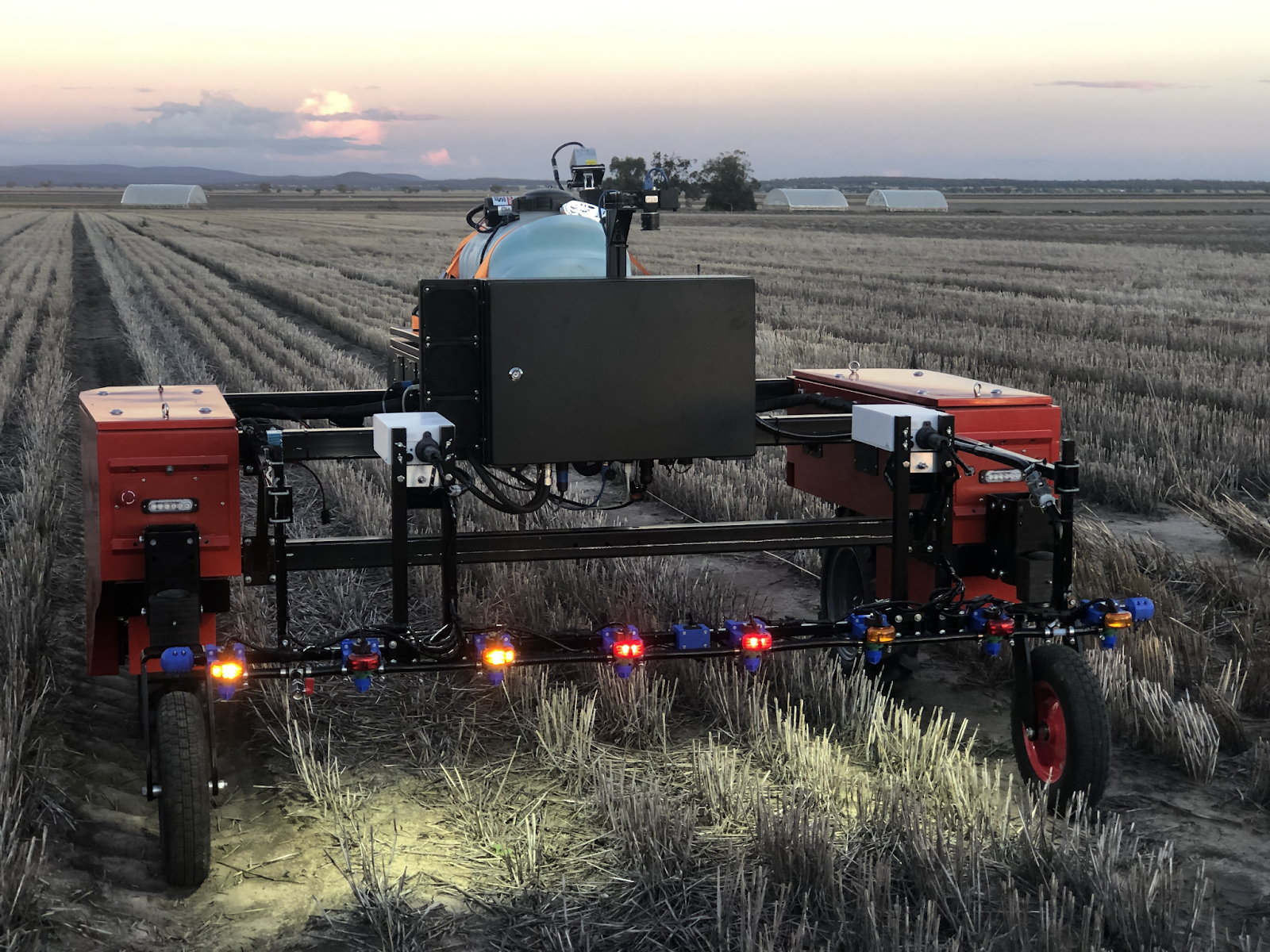
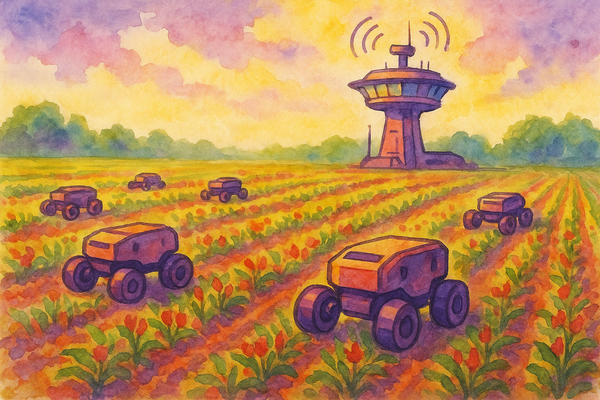
Robot mounted spot spraying (README file)
The open source software provides a range of algorithms by use case, including ExG (excess green), HSV (hue, saturation, and value) threshold, and a combined ExG and HSV algorithm. Currently the system works on detection of weeds on fallow systems. The algorithm and associated ground truth data report things like texture, color, background, lighting, camera angles etc.
For any vision based machine learning system, obtaining images of good quality and variety, which reflect the different operating conditions is a bottleneck and a challenge.
Systems which can address the image acquisition problem have the best shot at building solutions for weed identification, classification etc. Other centralized organizations solving the problem of weed identification can be better served by the OWL project, through collaboration on image collection, and tools for machine learning.
Another open source system highlighted by Tim is the Open GPS system developed by a community of developers across the world. The open source software reads NMEA strings for the purpose of recording and mapping position information for agricultural use. For a few hundred dollars, the ArcOpenGPS system provides auto-steering, AB line guidance, section control, auto headland and U turn on curve. The cost of the open source system is many orders of magnitude that the ones provided by traditional OEMs. $12 relay control board, like a, roughly a hundred dollar raspberry PI and a cheap camera
There are other similar industry led open source initiatives as well. For example, earlier this year, the Linux foundation in agriculture launched an open source digital infrastructure project to enable global collaboration between industry, government, and academia.
AgStack consists of an open repository to create and publish models, free and easy access to public data, interoperable frameworks for cross-project use and topic-specific extensions and toolboxes. It will leverage existing technologies such as agriculture standards (AgGateway, UN-FAO, CAFA, USDA and NASA-AR); public data (Landsat, Sentinel, NOAA and Soilgrids; models (UC-ANR IPM), and open source projects like Hyperledger, Kubernetes, Open Horizon, Postgres, Django and more.
Open Ag Data Alliance (OADA) is an industry-led open source initiative designed to bring interoperability, security, and privacy to agricultural data.
The longevity of community led initiatives is challenging as most open source projects end up with a very small percentage of users contributing to the open source software. Even for a mature, big, and diverse project like Linux, a few developers, nearly all of them employed by vendors, generate a huge percentage of core contributions.
One of the key differences between community led initiatives vs industry led initiatives is that the incentives of the community are much better aligned vs. the incentives of the industry. When you hear Brian Tischler, Guy, and William on the two podcasts, you can feel their level of excitement, pride, and satisfaction with the potential for their open source projects. Conflicts of interest, and coordination challenges, invariably make industry led initiatives slow, and bogged down in collaboration challenges.
In spite of all the challenges, I am very excited about open source software, as it represents some of the best things offered by the technology industry.