Hub and spoke model for data
Airline model works for data as well

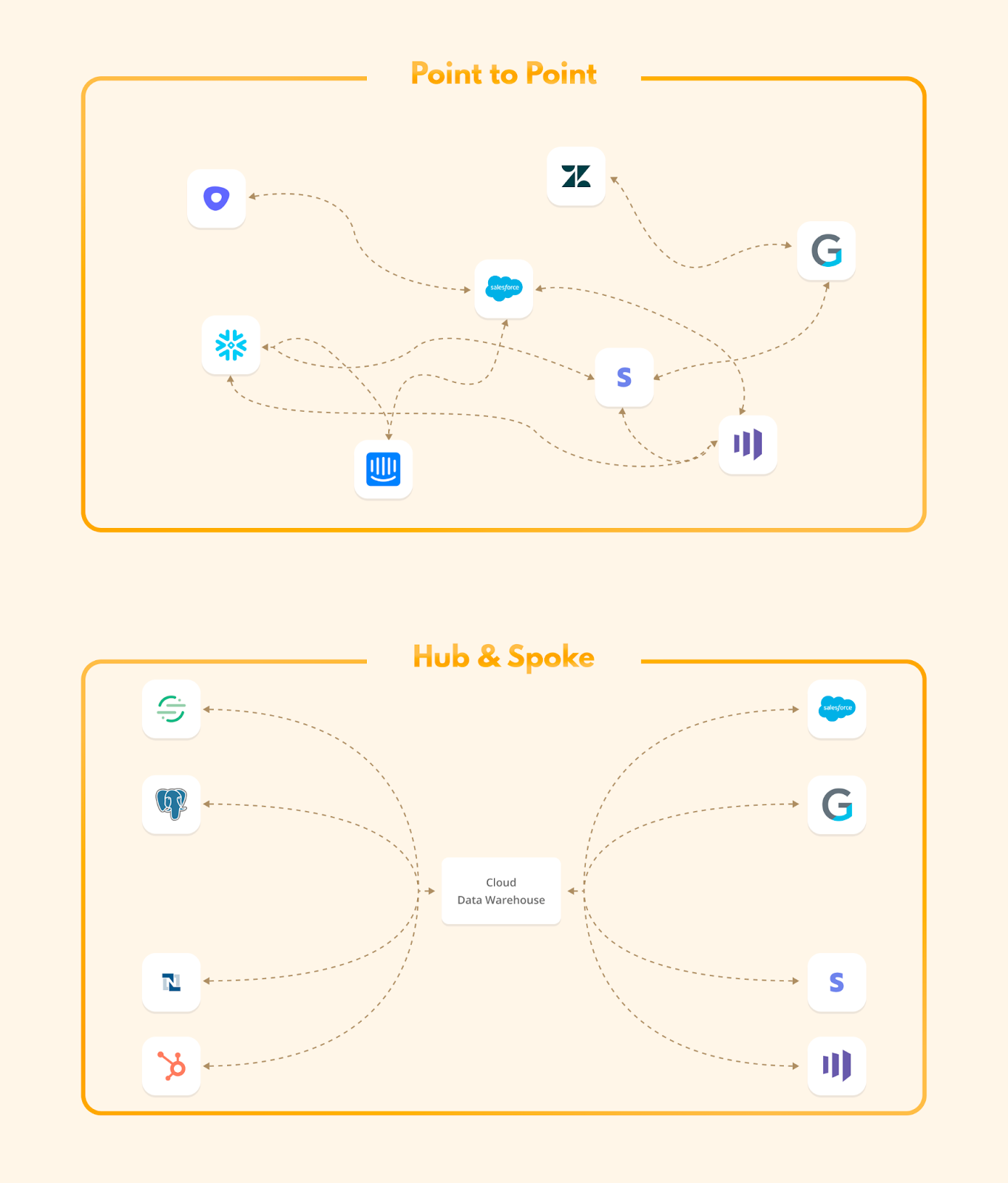
Hub and spoke model for data
💡Key takeaway: A hub and spoke model provided by a trusted entity can help with easier movement of data, and spur innovation in the long term.
In 1955, Delta was one of the first airlines to introduce a hub and spoke model for air-travel. Prior to 1955, most of the routes for airlines were point to point. The point to point model requires more routes. In a network of n nodes, only n - 1 routes are required to connect all nodes. For a point to point, network n x (n-1) / 2 nodes are required.
For example, in a system with 9 destinations, the hub and spoke model with one hub requires only 8 routes to connect all destinations, whereas a true point to point system requires 36 routes. If an additional destination (node) is added to have 10 destinations, then the hub and spoke model requires only one additional route to connect the 10th destination to all the other 9 destinations. The point to point model now requires 45 routes (so an additional 9 routes) to connect all the 10 destinations.
A hub and spoke model works well in the case of movement of data as well. A hub and spoke model can help alleviate some of the problems of interoperability, and reduce friction in seamless movement of data.
As I said edition 84. The Babel fish of agriculture,
Interoperable data unlocks actionable insights by connecting disparate sets of data and illuminating real world interactions and trends. Farmers can leverage interoperable data to optimize resource utilization and improve business, production, and sustainability decisions.
Interoperability can improve the customer experience with better onboarding (similar to Login with FB or Login with Google), consistent decision making (same data shared with the same meaning), multi-party collaboration (between different entities), and reducing system latencies.
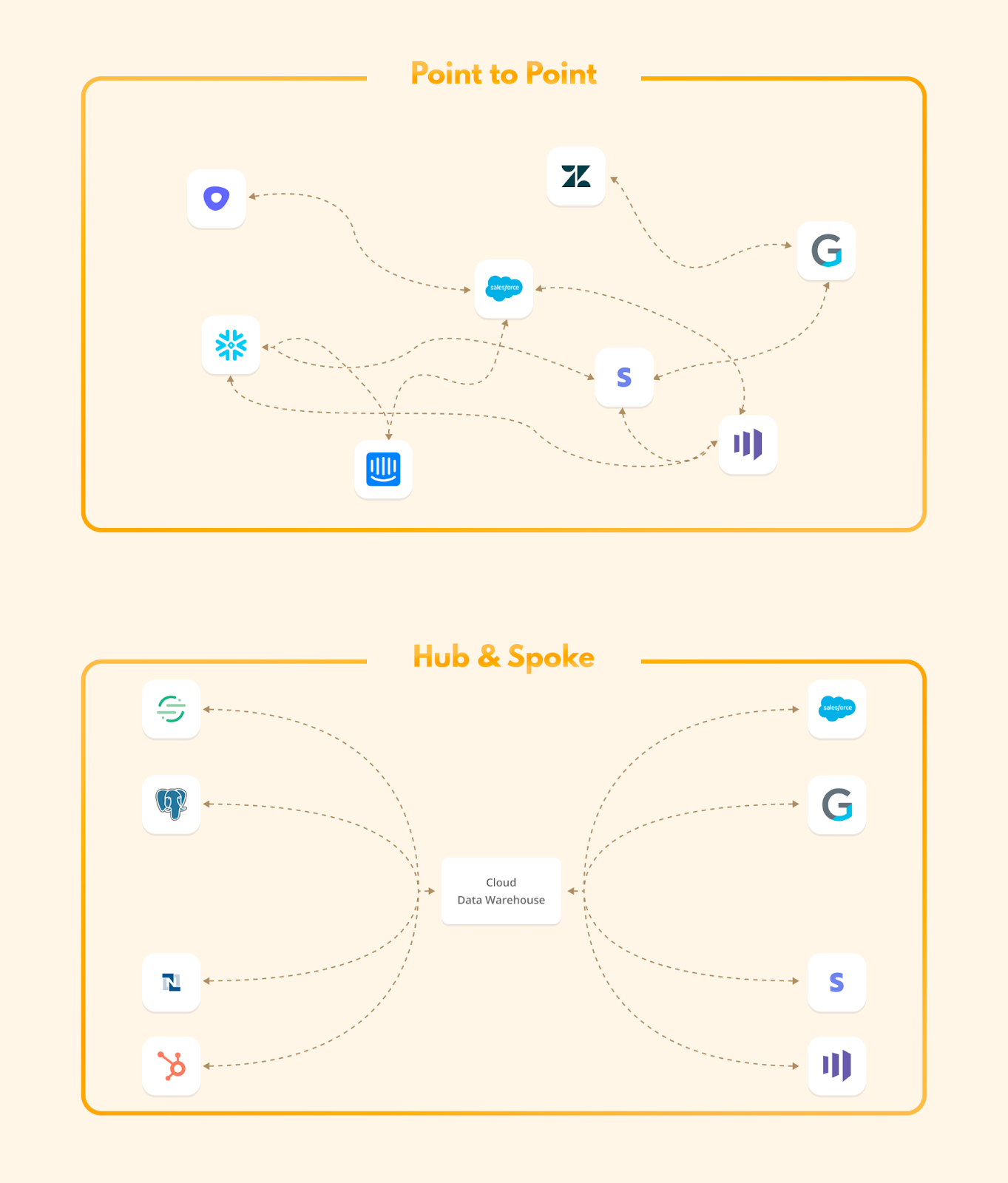
Image from “Hub-and-Spoke vs. Point-to-Point Data Synchronization: There's One Clear Winner“
As we saw with the example of going from 9 nodes to 10 nodes, a hub-and-spoke model scales more easily, can synchronize more accurately, is easier to maintain, is potentially more secure, and is less expensive to maintain than a point to point architecture.
Last week, Leaf Agriculture talked about how their hub-and-spoke model is helping Bayer quickly expand Bayer FieldView’s digital partnerships. Leaf Ag’s team is building the hub and the spokes for different digital agriculture solutions in the ecosystem, with FieldView being one of the nodes (albeit a big one), especially for precision agriculture data from commodity row crop equipment.
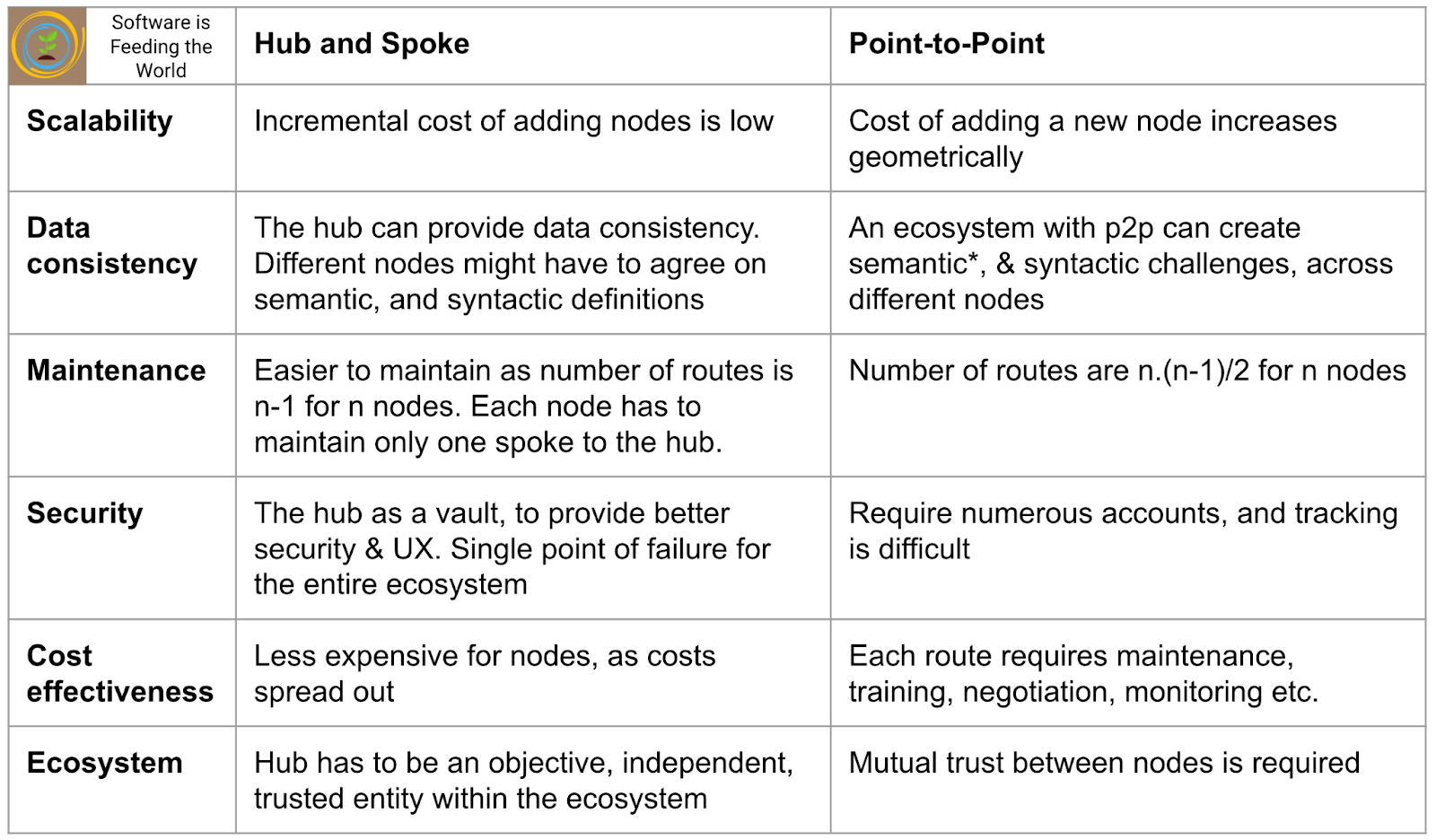
Comparison of Hub and Spoke and Point-to-Point systems for data movement
*Syntactic (or structural): Common data structure: the ability to communicate and exchange data between two or more systems through a standardized structure and format; shared syntax.
Semantic: Common data definition: the ability to exchange data between systems and for the data to be understood by each system; shared meaning.
I was incharge of building out a digital agriculture ecosystem from a product and technology standpoint during my time at The Climate Corporation / Bayer. As has been highlighted in an article on AgFunder by G. Bailey Stockdale (CEO of Leaf Ag), the challenges were multi-fold in terms of agreement on formats, engineering and maintenance time, prioritization of efforts, and tension between working on farmer facing tools, vs. working on the digital infrastructure to make it easier to move data around.
As I said in edition 45,
Data in silos is not useful. Other industries have faced this problem, and have tried to solve it with data standards (HL7 standards for clinical data) provide a way to exchange clinical and administrative data across different medical software systems).
Agriculture has made progress, with the emergence of standards like ADAPT, FarmOS, etc. The friction in interoperability is a wasted opportunity. It stems from lack of trust, and data exchange infrastructure. It is a tax on the user experience and innovation. When it comes to private farmer data, AgTech companies and platforms should not stand in the way of data movement as desired by the farmer. Collaboration will lift all boats.
Tools like Leaf and others, can reduce the friction in interoperability. The friction is really a tax on the user experience and innovation. Many organizations (especially retailers and cooperatives) might not have the engineering resources to do many multiple point to point integration to create additional value for their customers or members. ISVs like Leaf can provide a valuable service at a lower cost, and unlock the value of data by getting it at the right place at the right time, based on grower permission.
Leaf’s approach is not a brand new idea, as Ag Integrated (acquired by Telus) had/has all the elements to provide a similar service, and I believe they do provide it to a certain extent. Though once Leaf has a large amount of data flowing through their hub, they can offer higher value add services around data cleansing, data security, data provenance, and other infrastructure tools. Leaf has found an interesting wedge in the precision agriculture data ecosystem, and their success will depend on the UX they provide, and the independence, & objective nature of their tools.
Note: Do listen to Tim Hammerich’s Future of Agriculture episode 297FoA 297: A Case Study in Farm Data Integration with Leaf Agriculture