A math-econ nerd accelerates innovation at CNH
SFTW Convo with Michele Lombardi of CNH
Welcome to another SFTW Convo. This week’s edition features a conversation with Michele Lombardi. Michele is the SVP, Corporate Development & Venture Capital at CNH. This week's edition is available to all subscribers, including for the free tier.
Michele is a very thoughtful nerd, who has worked in multiple countries all over the world, including Thailand, China, Australia-New Zealand among other places.
He is a student of economics, and technology. He has a keen sense of how innovation happens, and most importantly how it can scale. Corporate Venture Capital is relatively new at CNH. I wanted to get his perspectives on how it was set up, how his thinking has evolved, and what are some of the challenges of working with a large agribusiness like CNH.
This wide ranging conversation has utility for entrepreneurs, startups, investors, and other agribusiness employees. This conversation is available for free to all subscribers.
I hope you enjoy it as much as I did.
Scaling Regen Ag Starts with Better Data
Farmers Edge is building the digital backbone for regenerative agriculture—designed to simplify Scope 3 reporting and deliver credible results, fast. With Managed Technology Services built for agribusiness, Farmers Edge connects real-time field data to your sustainability goals across every acre and every grower in your network. From in-season tracking to end-of-year proof, Farmers Edge makes regen ag measurable and manageable. If you're serious about scaling impact and reporting, this is the infrastructure that makes it possible.
Summary of the conversation
In this conversation, Michele Lombardi discusses the intersection of his educational background, his subsequent work experience in multiple roles and multiple countries, and how it has shaped his career in corporate venture capital within the agriculture sector. He elaborates on the recent launch of CNH's venture group, the challenges and opportunities in measuring success beyond financial returns, and the dynamics of collaboration between startups and agribusiness.
He emphasizes the importance of understanding risks, particularly team quality, and the need for effective communication to bridge the gap between startups and established corporations. In this conversation, he discusses the role of corporate venture capital in supporting startups, the continuous innovation within tech stacks, and the strategic allocation of investments in agriculture technology. He emphasizes the skills required for effective corporate venture investing. Lombardi also reflects on missed opportunities and the future of farming, highlighting the need for improved productivity and sustainability in the agricultural sector.

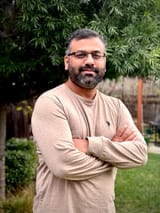
Michele Lombardi, CNH (Photo provided by Michele Lombardi, artwork by EI)
A math-econ nerd accelerates innovation at CNH
Rhishi Pethe: You have a double major in computer science & electrical engineering, and in economics. How has that training of learning computer science, a very precise and algorithmic discipline, versus economics which requires understanding systems helped you be a better investor, better corporate development person and an analyst?
Michele Lombardi: That’s a very interesting question. Let me share a bit of background on how that came to be.
I came through the Italian education system, where engineering, still today, possibly, is considered the highest form of academic training in terms of quality and structure. People see it as a strong foundation, regardless of what you plan to do later in life. And I’ve always had an engineering mindset, so choosing that path felt natural.
I studied at MIT because, I felt such a strong pull toward mathematics. I entered MIT as an engineering student, even though I already knew I didn’t want to become an engineer in the traditional sense.
I had to choose a minor, and at the time I knew almost nothing about economics. But when I started exploring it, it really struck a chord. Just to clarify,because I have to contradict you here,economics at MIT isn’t about studying general systems. It’s very mathematically driven, with a heavy focus on micro and macroeconomics. That rigor is exactly why I chose economics over management.
As I got deeper into it, I realized how much it resonated with me. What began as a minor turned into a second major, and I graduated with a double degree.
That combination of engineering and economics gave me an education I’d recommend to anyone. It offered a powerful balance. I left school with the ability to solve complex problems,because engineering taught me the discipline of problem-solving, while economics gave me a solid grasp of the key economic forces that shape the systems around us.
That blend has served me well in my current work. I can understand the engineering behind the solutions I see, not at the level of the experts I meet, but enough to grasp how the components fit together and have meaningful conversations. And my economics background gives me a strong foundation for analyzing the drivers behind any business decision I need to make.
I didn’t plan it this way, but I’m very glad it turned out the way it did. It’s shaped who I am.
Setting up a venture capital group at CNH
Rhishi Pethe: You started your venture group two, three years ago. The corporate venture groups in agriculture are a recent phenomenon, maybe in the last 20 years. Monsanto has had for some time, Syngenta has for some time. So why did it take so long for CNH to launch a venture?
Michele Lombardi: CNH didn’t have venture capital on its radar at all. It’s not that the company opposed it, it simply hadn’t considered it. No opinion, no initiative.
You mentioned that Ag Venture has been around for 20 years, and yes, it has, but until 2017 or 2018, it played a very minor role. It wasn’t common for large corporations to engage in it. From our point of view, it was a novelty.

When I joined CNH in 2019, I came in with the energy I always bring, I like to move fast, try new things, and push for better. I met a few people who were really enthusiastic about venture capital, and honestly, I didn’t know much about it myself. So I started talking to a lot of venture funds. At first, we thought, “Well, we don’t know what we’re doing yet, so let’s start by investing as an LP.”
At the same time, I worked internally to explain what venture capital even was. I had to build internal education while I was educating myself.
But over time, I moved past the LP model. My thinking shifted: “If we’re going to do this, let’s do it directly.” The biggest value for us wasn’t just financial, it was the opportunity to learn. This was the right moment. There was a lot of activity, many active funds we could learn from or partner with, and a ton of energy in the ecosystem. And because we’re a major OEM, the moment we said, “We’re in,” it wasn’t hard to build a strong deal flow.
I kept building that momentum until I brought a proposal to the CEO. I said, “Look, this is a relatively low-risk investment in terms of capital. But the potential upside,in learning, partnerships, and innovation,is enormous.”
That’s when we formalized the effort. We had already made a few investments before we publicly launched the platform, and we brought those early bets under one umbrella. As soon as we went public with it, other OEMs, who I won’t name, quickly followed and matched our moves. Which is fine, honestly. We co-invest with some of them now.
That response validated the approach. And the truth is, none of us are doing this purely for financial return, especially in this current climate. We’re doing it for the learning, for the access, and for the chance to collaborate with the next wave of innovators.
Rhishi Pethe: So yes, you talked to various VCs, and that was clearly a valuable learning process,for you and for the company. But I’m curious: was there something specific about that moment in time which pushed you to pursue corporate venture capital then?
Was there something happening in the broader ecosystem ,technology trends, capital availability, market urgency, that made that the right window? What was it about that moment?
Michele Lombardi: It was really a culmination of factors, an intersection of timing, momentum, and leadership. By that point, I had been in the role for a couple of years. I had built enough traction internally to lift my head above the day-to-day and start learning more broadly. Around the same time, the AgTech startup space really started heating up. Suddenly, I was getting bombarded with opportunities. But the truth was, we didn’t yet know how to engage with them, these companies had a new shape, a new form, and the collaboration models weren’t clear.
Then we brought in a new CEO, he’s no longer with us, but at the time, and still today, he’s someone who brings this positively aggressive energy. He truly wanted to drive change. He didn’t just want to observe the ecosystem, he wanted to participate, to learn and teach, and be a real actor within it. So when I brought this idea to him, he immediately saw the opportunity.
That combination of factors made it possible to launch our venture initiative. The timing, the leadership, the rising wave of AgTech innovation, it all aligned. Would I still launch it now, if we hadn’t done it back then? Yes, I think I would. Even in this different, more sobering environment, knowing what we now know about the difficulty of execution and the low survival rate, I’d still do it. It’s worth it.
And to preempt your next question,since diving into this world, I’ve been very vocal about one thing: there were too many players entering this space without a true understanding of how agriculture works.
You had smart, well-intentioned people bringing experience from other sectors into AgTech. They wanted to drive positive change, but didn’t fully grasp how different this environment really is. At the same time, top-tier investors, backed by good capital and impressive track records, entered the space and deployed aggressively. But again, they didn’t fully appreciate that ag’s cycle times, buying behaviors, and outcomes are fundamentally different from those in other industries.
That led to an explosion, exciting, yes. Rich with energy, ideas, and ambition. But also noisy. Now, the environment feels more somber. Less exuberant. But I think that’s okay.
Because after that bubble burst, what we’re left with is the group that gets it, the participants who understand the system, who know what they’re building toward, and who are strong enough to stay in the game for the long haul. And those are the ones who can actually bring the change everyone was hoping for.
Rhishi Pethe: You felt that the signal to noise ratio before you guys entered was a bit weak.You felt that by coming in, you could increase that signal to noise ratio.
What are your clear goals for the CVC arm, and how do you measure whether you’re actually meeting them? If I were evaluating a traditional VC fund, the metric is straightforward, financial return. It might take time, but the goal is clear.
You said financial returns matter, but they’re not the primary objective. How do you demonstrate success in a way that builds long-term confidence in the CVC model?
Michele Lombardi: Yes, financial return is easy to measure, at least in principle. But because of the way we invest, why we do it, how we approach it, we make far fewer investments than a traditional VC. We’re much more selective. That means our capital goes into fewer companies, and that concentration raises the financial risk. Fewer bets, higher stakes.
But the real question, the one you asked, is fundamental: How are we doing, really?
If I’m honest, we’re probably not doing as well as I’d like. The core reason we invest is to learn. We want to create meaningful opportunities for collaboration between startups and our organization. Sometimes those collaborations yield immediate outcomes, but often they don’t. And that’s okay. Because what they do offer is a path to accelerate our understanding of emerging solutions, of how the market is shifting, and they help startups understand what it means to engage with a large OEM. That learning goes both ways.
We’ve made progress toward those goals. I’d say we’ve met many of them, to some degree. But have we reached the level of impact I was hoping for? Probably not yet. We're still working on it. This isn’t a two-year project. It’s a long journey.
At first, we struggled to understand how to play the right role. We gradually got better. Today, we apply a much sharper filter when selecting who we partner with. I love our portfolio. We’ve backed great companies and great teams. But we’ve also improved the way we engage, both for our benefit and for theirs. Every time, we’ve gotten better.
And part of the complexity is that the learning doesn’t stop with me or my team. That would be easy, a small group making controlled decisions, learning from mistakes, iterating quickly. But that’s not the case. This work touches the broader organization. Maybe not all 35,000 employees,but definitely 1,000 or more. They’re the ones interacting with startups, shaping those partnerships, and trying to extract real value from them.
They have to go through their own learning curves. They have to recalibrate how they work with early-stage companies. And that takes time. It takes a cultural shift.
But that brings me back to the core reason we’re doing this in the first place: we see venture as a transformational force for CNH. So when I see us struggling, asking questions, rethinking our approach, that, to me, is a sign of success. Because it means the transformation is underway. We’re not just investing in startups, we’re investing in changing how we think, how we work, and how we evolve.
Roadmap acceleration through Corporate Venture Capital
Rhishi Pethe: You mentioned CVC to accelerate your transformation or speed up your roadmap.
But how do you actually measure acceleration? There’s no clear counterfactual. You can’t rewind and run the same roadmap without this initiative to see what pace it would’ve taken.
How do you know that your roadmap is moving faster? What are the markers that tell you, you are moving meaningfully faster than we would have otherwise?
Michele Lombardi: I’ll give you an example, because while it’s true that measuring success in this space is difficult, and we could spend days debating independent versus correlated metrics, some outcomes speak for themselves.
We invested in Augmenta. That led us to discover See & Act. We tested the solution with our customer base and saw a phenomenal reaction, something we never would have reached on our own. That insight led us to acquire Augmenta. Today, we have launched a full suite of products with Augmenta’s technology fully integrated. That’s a direct line from investment to transformation.
We also invested in Monarch. At the time, we had no electric solutions in our portfolio. Two years after the investment, we launched a 75-horsepower electric tractor at Agritechnica. Was it a commercial success? Not yet. The market isn’t fully there, so we’ve paused the product. But from an innovation standpoint, it was a huge success.
That collaboration helped us stand up an internal team, learn how to build a viable electric solution, and initiate relationships across the entire EV supply chain, not just with Monarch. It validated that if we decide to go all-in on an electric tractor, we can. We have the team. We have the know-how. And we had Monarch’s incredible support throughout.
So to me, these are powerful examples of success, hard to measure with simple metrics, yes, but transformative nonetheless.
Rhishi Pethe: You bought Augmenta and it is now a part of your product portfolio. Monarch is not part of your product portfolio.
Michele Lombardi: With Monarch, it is a good collaboration, one that brought phenomenal acceleration to certain solutions and, more importantly, sparked real internal transformation.
We invested in people and in a space we had never even looked at before. That alone created momentum and energy inside the organization that we wouldn’t have had otherwise.
A bilateral learning experience
Rhishi Pethe: And I’m sure these collaborations also serve as powerful learning opportunities, especially for CNH employees. When they work closely with startup teams, they’re exposed to different skills, faster decision-making cycles, and entirely new ways of thinking.
It goes both ways, too. Startups gain insight into how large enterprises operate, what it takes to scale, and how to navigate complexity at global scale. I’ve been at startups,I know exactly how valuable that exchange can be on both sides.
Michele Lombardi: It's a very painful learning process. On both sides.
Rhishi Pethe: Collaboration can take different forms. Let's take a minority stake, or let's do a full acquisition, or do a simple commercial agreement. What is the decision rubric to do a minority stake, or a commercial agreement, or an acquisition?
Michele Lombardi: These are three solid examples, and they highlight a key point: every decision follows a different set of parameters.
When we look at acquisitions, the first threshold we apply is: Do we need this? Specifically, how does this technology or solution fit into our roadmap? If it’s a critical feature, a core competency, or a foundational technology that we believe we must own, then yes, we pursue an acquisition.
At that point, the decision tree splits into two paths. On one hand, if we find a target that’s mature enough, or at least well enough understood, we’ll try to buy it, run it, and integrate it. On the other hand, if the technology is still at the frontier, something only early-stage startups are working on, and we believe we can’t complete the development ourselves if we buy it outright, then we invest instead.
If the technology is truly critical, we may invest significantly. That allows us to support the team, influence direction, and keep a foot in the door for a future acquisition if the fit evolves.
Now, if the technology isn’t core to our product stack, but it’s an area we want to learn from, or explore for potential integration, we’ll make a lighter investment. It’s a way to stay close, absorb insights, and remain strategically flexible.
In cases where we’re looking at a finished product, something we want to integrate into our offering or distribute alongside our existing products, a collaboration might be enough. But if that finished good starts to look like a future platform opportunity, or if it touches our core in a meaningful way, then we might decide to acquire it outright.
Rhishi Pethe: You mentioned on the Future of Agriculture podcast that you typically invest at the Series A stage. And sure, investing in any startup carries risk, but just saying “it’s risky” isn’t precise enough.
There are different types of risk: technology risk, commercial risk, distribution risk, scaling risk, team risk, the list goes on.
So when you make an investment, which of those risks do you deliberately try to avoid? The ones where you say, “That’s not our play,we’re not comfortable taking that on.” And on the flip side, which risks are you willing to take because you feel you have the tools, the experience, or the strategic position to manage them,and maybe even turn them into an advantage?
You have to understand that as a strategic investor, my perspective is inherently skewed. My top priority is to validate the technological solution. That’s where I focus first.
So yes, I always recognize the scaling risk. That’s often the first contribution I bring to a board: I highlight it. I tell the team, “Be careful, you’re underestimating the complexity of scaling.” And they almost always are. Not so much on the industrial side, but especially when it comes to product readiness and commercial execution.
Do I take that risk anyway? Yes, because my primary interest lies upstream, in validating the solution itself. That comes first.
The risks I try to avoid, where I draw a harder line, are around team quality and board composition. I strongly believe the team is everything. I also look closely at the board. Is there the right kind of economic and managerial support in place to help the founder navigate tough times? Often, you’ll have a brilliant entrepreneur who isn’t yet a seasoned manager. The right board can make all the difference in helping that person scale, manage complexity, and avoid blind spots.
Over time, I’ve come to see those two elements, the team and the board, as absolutely fundamental. Everything else, you can usually work through.
Of course, I need to believe in the technology. If I didn’t, I wouldn’t be involved. And I need to believe the team has what it takes to complete the technical development. That’s why we tend to invest at the Series A stage. By then, there’s usually a prototype or working solution in place. That gives us a level of confidence that the technology will work.
But more importantly, it allows us to see it. We’re not as imaginative as the entrepreneurs, we need to touch it, test it, play around with it. Once we do that, once we truly understand what the solution is, we can say, “Yes,this is what we want.” And that’s when we step in to support the company.
Working with startups
Rhishi Pethe: And let me flip to the other side of the table. If I’m a startup founder, and this is something you talked about on the podcast, your job is to break down the wall that can form between a startup and the corporate partner.
Founders obviously want the benefits a CVC brings: capital, access, strategic insight, distribution. But do you find that some founders worry that working with a corporate, like CNH, might actually slow them down?
And if that concern exists, how do you address it? Do you track any post-close metrics to see if the startup is still innovating at the same pace, hitting product milestones, launching new iterations,after the deal? How do you know the partnership is additive and not unintentionally creating drag?
Michele Lombardi: OEMs can be difficult investors for founders. We bring a mix of attributes that make us incredibly attractive,and, at the same time, intimidating.
On one hand, we offer significant value. We have reach, resources, customer insight, infrastructure. But as I’ve mentioned elsewhere, extracting that value is rarely straightforward. It’s not about lack of willingness. The challenge lies in the willingness to sit down and explain, to listen, to bridge worlds. There’s a well-known wall between startups and corporates. It’s real. And it takes work to get through. But there is tremendous value on the other side.
At the same time, OEMs move more slowly than startups. We are more conservative, more cautious in how we make decisions. That often gets perceived as being difficult. I don’t think it’s difficult. We come from different realities.
And do we slow startups down? I don’t think we try to. We’re very careful not to interfere in their internal development. But sometimes, the friction goes the other way. Startups often come in thinking the OEM will open doors instantly. They take our presence on the cap table as a fast track to market access. And in theory, that makes perfect sense, we’re happy to support that.
But here’s where the disconnect happens. We might sit down with the team and say, “Yes, the opportunity is there, but in our view, you’ll be ready in two years.” Why? Because the product still needs work. It hasn’t been stress-tested. And our customer base expects a certain standard. We’ve built trust through product support, reliability, and care. If we run a startup’s product through that same pipeline, it has to meet the bar. And building that robustness takes time.
We’re happy to help get it there. But the startup expected acceleration, and what they perceive instead is delay. That’s not because we’re putting on the brakes, it’s because our perspective on readiness is different. That’s the real gap.
Rhishi Pethe: How do you go about setting the right expectations with a startup once you're on the cap table? Because from the founder’s side, they’re thinking, “We’ve brought on a strategic, now what?” They want to engage, test, and see value, not wait two years to get in front of a grower.
So is there a more advanced group of growers in your network,early adopters, maybe,who are open to piloting prototypes and giving real feedback? People who are still farmers but more willing to roll the dice?
And beyond that, are there other mechanisms you use to help startups plug into your network,ways that create real engagement but still protect your brand and your grower relationships?
Michele Lombardi: That’s exactly how we operate, and we go even further.
When startups ask for it, we actively help them shake down their products. We assign our internal teams, teams that run the same rigorous tests on our own equipment, to work with these startups during windows of opportunity. That process gives them firsthand insight into how an established OEM validates solutions and what we look for before bringing a product to market.
For a startup, that’s a phenomenal learning opportunity. It’s a rare chance to see our standards up close and understand what true market readiness looks like.
We also have dealers who are naturally passionate about innovation, those who are more inclined to explore new technologies. Startups often connect with these dealers on their own, but we also make those connections when it makes sense. And the same goes for progressive farmers, contractors, and ag retailers, people in the field who are eager to try what’s next.
Startups gain access to that network, either directly or through us, and it becomes a powerful ecosystem for experimentation and feedback.
Innovation and investment
Rhishi Pethe: You’ve acquired Raven, Hemisphere, and developed your own internal navigation systems,so now you're building out a full guidance tech stack. From the outside, if I’m an entrepreneur looking at that, I might think, “Well, CNH already owns the whole solution,there’s no room left to innovate here.”
Do you think that owning the full tech stack ever risks stifling innovation,whether internally or externally? And how do you signal to startups or entrepreneurs that there’s still white space worth exploring around or within that stack?
Michele Lombardi: That’s a great problem to have, but no, we don’t see it that way. And frankly, I don’t think any of us OEMs are in that position. So I wouldn’t worry about it.
Innovation is happening all the time, both within our own tech stack and beyond it. Yes, there are elements of the stack that we own. But at the same time, innovators outside CNH continue to reimagine those components and push them in new directions. And we welcome that.
What’s changed, and what gives us a major advantage today, is that by owning the tech stack, we now fully understand how the entire system functions when applied to agriculture. That’s something we didn’t have a few years ago.
We’ve built a highly capable engineering team that keeps advancing our internal platforms. And now, that same team can have meaningful, technical conversations with innovators outside the company. They can evaluate, collaborate, and bring in new thinking, just like we’re doing through these dialogues.
So no, owning the stack doesn’t stifle innovation. If anything, it helps us connect with it more intelligently. And it absolutely shouldn’t discourage anyone from bringing new ideas into our space. We’re open to it.
Rhishi Pethe: When I look at the types of investments you’ve made to accelerate your roadmap and support the mothership, there’s a clear focus on autonomy, precision agriculture, connectivity, and also a growing interest in sustainability and alternative fuels.
At a higher level, you obviously have a finite pool of capital to work with. How do you decide how to allocate that across these big thematic buckets?
What’s the rubric you use to prioritize? Is it driven by immediate product relevance, long-term transformation potential, or internal business unit pull? And how do you balance bets that support the core today versus ones that could redefine your edge tomorrow?
Michele Lombardi: We don't work that way. We are not a VC or an &A independent or a private equity. We are a corporate unit that operates inside CNH. We are fully integrated with the agriculture division, the construction equipment division, the financial services division. We have continuous dialogues about their roadmaps, market presence, product range, opportunities, roadblocks, gaps and many more things. We use these conversations to build a map of opportunity, which we prioritize. On the other hand, we go out with a clear understanding of what they are interested in and we try to learn, and understand what is out there. We have a map and we try to find which players are out there that would satisfy our gaps.
Then the allocation of capital is not driven by priorities that Michele comes up with, but are driven by what is mostly most urgent for our CTO or what is more urgent for our commercial officer or construction equipment president, etc.
And so then we cross their order of priorities and market availability and we decide on that map, we decide what's M&A, what's VC, what's an alliance, what's an OEM agreement.
Rhishi Pethe: You’re mixing M&A with inputs from across the organization. You gather signals from different business units, understanding what they need, where their roadmaps could accelerate, and where critical gaps exist.
Then you match that internal demand with your own mental map of what’s happening in the external landscape. You’re constantly assessing where CNH is best positioned to invest, partner, or acquire, based on both strategic fit and opportunity timing.
Michele Lombardi: That actually answers your question, because if we had venture capital and M&A operating as two separate teams, we’d have to split focus. We’d need to say, “You, on the VC side, handle these five things, and you, on the M&A side, handle the rest.”
But that’s not how we’re structured.
We operate as a single corporate development team for CNH. We support everything that falls under the umbrella of inorganic growth, whether that’s venture investing, acquisitions, or partnerships. And because of that unified structure, we can stay flexible. We apply whichever tool, VC, M&A, or something hybrid, is best suited to the specific situation and the target partner.
That gives us both strategic alignment and operational agility.
Rhishi Pethe: We talked about automation, connectivity, sustainability. A couple of years ago, you acquired AgDNA.
Michele Lombardi: It was one of my first transactions actually.
Digital capabilities at CNH
Rhishi Pethe: I don’t know what the full reality is, but if you go on Twitter, admittedly not always the best source, there’s a lot of positive talk about John Deere’s Operations Center. People seem to value the experience, especially when it comes to data integration and APIs. In contrast, CNH’s digital presence doesn’t seem to get the same praise.
From what I’ve heard, CNH’s tools have APIs, but users often say they don’t actually work as expected, or aren’t reliable in real-world use.
What are you doing, or planning to do, to improve the fusion between software and hardware that’s essential for building smarter machines? How are you thinking about getting that experience to the level growers expect?
Michele Lombardi: Most of the work we’ve done to build out our onboard and off-board farm and machine management capabilities has come from within our digital team inside the CTO organization. Back in 2018 or 2019, our capabilities in this space were very limited. We didn’t have much at all.
One of my first transactions was AgDNA, which turned out to be a great team and a pivotal moment. Followed by the Raven acquisition, these investments marked CNH’s first real commitment to accelerating our digital capabilities.
Since then, we’ve made tremendous progress. We recently launched our new digital platforms, and we continue to evolve and enhance them.
Many of the acquisitions we’ve made since then have added important capabilities. But I’d say this is one area where most of the development has come through organic integration of the smaller, strategic pieces we brought in earlier. That foundation has created strong momentum, and we’re confident it will help us deliver valuable, effective digital solutions to our farmers.
Rhishi Pethe: Do you see any gaps around software-hardware integration which could be addressed through strategic investments or acquisitions to help accelerate your roadmap?
In preparation for this conversation, I spoke with several folks at seed companies. And the feedback I consistently heard was: “We want to integrate with the equipment, pull planting data, write a prescription, and send it back to the machine to execute, but working with CNH is difficult. The APIs aren’t accessible or reliable.” By contrast, they said Deere makes that process much easier.
Do you see those integration challenges as real? And if so, are you actively working to close that gap,whether internally, through partnerships, or via acquisitions?
Michele Lombardi: Of course there are gaps. There are gaps in our platform, in John Deere’s platform, and frankly, in everyone’s platform. The truth is, we’re all still building. At CNH, we’re working hard to improve ours, and it’s already significantly better than it was just two years ago. And we’ll keep evolving it.
That improvement comes through a combination of internal development and acquisitions. You’ve focused a lot on APIs, but it’s important to understand that APIs are often a byproduct of a specific strategic decision, usually the decision not to acquire. So when we decide to build integrations through APIs, it often means we've chosen to stay at arm’s length rather than bring the technology in-house.
That’s exactly where the internal team comes in. They build the backbone. And once that foundation is in place, we can enable external players to plug into it. In many cases, we’ve had conversations with startups who offer great solutions. And sometimes the right move is not to invest or acquire, but it’s to build a clean API so we can integrate without creating unnecessary complexity.
And going forward, I expect that path, building out our backbone and enabling external connections through APIs, to only accelerate.
What makes a good Corporate VC?
Rhishi Pethe: We started off with your computer science and economics study. What are some of the skill sets or characteristics which make somebody a good CVC corporate venture investor?
Michele Lombardi: Luck. I didn't invent it, Napoleon came up with that and he's absolutely right.
Rhishi Pethe: He also made big mistakes. He invaded Russia in winter.
Michele Lombardi: That’s why your generals need to be lucky, yes, but also very capable, honestly, and he obviously might have overestimated luck. What’s crazy is that others have repeated the same mistakes since. But let’s move on from history.
Jokes aside, in addition to being lucky, I think the most important skills for a strong team member, especially in this role, come down to how they engage with opportunity. Funny you ask, because I’m recruiting now.
What I need is someone who can truly understand the opportunities that come to us. And that requires three things: first, they need to understand our field of work. Second, they need to grasp the complexity our counterparts, startups, founders, are dealing with. And third, they must be able to see how we can help. That could mean stepping in themselves, or connecting those people to the right internal actors. Either way, they need to frame the opportunity in a way that enables support to happen.
This job takes people who love to learn and who naturally build bridges, not people who show up with a defensive mindset. I need people who are willing to act as support agents. That’s what we are.
The financial side of investing is the easy part. By the time a startup lands on my desk, the financial analysis is almost always solid. What I really care about is whether the team behind the startup is robust enough to handle complexity. Are they ambitious, but also realistic about the challenges ahead? If they’re chasing a bold goal, that’s great, but do they know it’s bold? Do they have the humility to prepare a Plan B, in case Plan A doesn’t go the way they hope?
That’s the kind of awareness I’m looking for. And I need someone who can guide that line of thinking, so when we invest, we show up as the right kind of partner.
We don’t manage a passive portfolio. We’re very active. So the people who thrive here are the ones who enjoy going through all of this. The ones who are wired to support, not just financially, but strategically and emotionally too.
Rhishi Pethe: I'm sure there are instances where luck doesn't favor you. All VCs have an anti-portfolio. Things that you passed on. And then they became successful. And then later you think, I should have invested in that. Were there signals that you missed or didn't read? Are there examples that you could talk about? And what was the learning from that process?
Michele Lombardi: I won’t name names, but yes, there are definitely examples.
As a strategic investor, I can only invest in startups that align with our strategic priorities. That usually means an internal stakeholder needs to express interest in that company and commit to pursuing some form of dialogue or collaboration. That’s the definition of strategic fit for us.
So, yes, we come across phenomenal teams we’d love to invest in, but we can’t, simply because the internal alignment isn’t there. Those are missed opportunities, and they do happen.
Then there’s another category: the startups that defy gravity. I’ll come across a great team with a concept that, on paper, just doesn’t make sense. It’s not energy efficient. The technology seems flawed. There are clear alternatives. I look at it and think, “This isn’t going to work.” And then they succeed. Spectacularly.
Those are the ones I can’t ignore. I keep the conversation going, even if we didn’t invest, because I want to understand what I missed. In some cases, we didn’t just pass, we actively said, “No, this is crazy. It’ll never work.” And then it works. That’s humbling. And that’s why I stay engaged, because I’m still learning, and those are the best teachers.
Rhishi Pethe: Are most of them not rightly calibrating the team?
Michele Lombardi: I wouldn’t say I underestimated the team. I like to think I’m fairly good at reading people. What I underestimated was the demand. It’s hard to predict how the market will respond. Sometimes a solution looks inefficient, or even crazy, and then the market embraces it.
There are a couple of examples I’m thinking about now. One, I genuinely regret not investing in. The other, I’m still watching and thinking, “This is crazy. At some point, it’s going to hit a wall.” But maybe not. And that’s part of the game.
At the end of the day, this is why we have a CVC program in the first place: to learn. We want to be part of the ecosystem. We want to engage, contribute, and evolve with it.
So yes, we invest to learn, but we also learn by showing up, by staying in the conversation. Today alone, I had two meetings, one with investors, one with entrepreneurs from more mature startups. Even if we don’t invest, we bring internal stakeholders into those discussions. And those conversations are just as valuable.
That’s how we stay connected. That’s how we grow.
Rhishi Pethe: It sounds like you’re playing an infinite game, where the key is simply to stay in the game, keep learning, and trust that good things will emerge over time.
Tech Giants in AgTech
You’ve had a partnership with Microsoft for a couple of years now. So stepping back a bit,what role do you think major tech companies like Microsoft, Amazon, or Google can play in AgtTech?
Michele Lombardi: It’s interesting, because the real question isn’t just about how these tech giants can support us. They do support us, and we’ve had fantastic conversations. Microsoft, for example, is a great partner.
But the dynamic is shifting. These companies aren’t just supporting the ag space anymore, they’re entering it themselves. They’re beginning to disrupt it directly.
They bring massive compute power and deep experience in building world-class software. They know how to design intuitive platforms that solve incredibly complex problems under the hood. And when you look at agriculture, everything from APIs to farm management systems, to onboard-offboard integration, machine learning, image recognition, and decision support, that’s all software.
We see a lot of startups trying to tackle this space. But players like Microsoft, Nvidia, and Google, they came in, took a look around, and I think they realized something: in many ways, the rest of us are like children experimenting, while they hold the real power, if and when they decide to use it.
Now, I think they’re trying to figure out what role they want to play,and what role they should play. And watching that unfold is fascinating.
Rhishi Pethe: What role would you want them to play? Where do you think they can help you and CNH and the overall ecosystem?
Michele Lombardi: These tech companies are building the tools that enable everything we just discussed. That work frees up our internal teams from having to reinvent those same mechanisms, tools that, while essential, don’t directly add agronomic value.
These are software modules that solve foundational problems, problems every player in the ecosystem faces. And by solving them, they allow our teams, and those inour ecosystem, to focus on delivering incremental value. We can now concentrate on what truly differentiates us, rather than spending time on the basic digital plumbing.
And this goes far beyond just cloud infrastructure. This isn’t just AWS or Azure. What they’re building is the agricultural equivalent of Microsoft Office, complete with a Copilot. It’s a full-stack digital backbone designed specifically for ag.
I saw a demo recently, and it was fantastic. It’s exactly what we’ve all been waiting for. Exactly what the industry needs.
Future casting
Rhishi Pethe: You’ve made several investments and acquisitions already, and I’m sure there’s more to come. Let’s say you’re fortunate, and some of those bets play out the way you hope.
Can you paint a picture for us: how do you think a farm or farming operation might look five or ten years from now because of the decisions and investments you’re making today?
Michele Lombardi: Ten years isn’t a very long horizon, but yes, farming will absolutely look different by then. I don’t know the exact timeline, but I do know the direction.
And it’s a good one.
Everything we’re doing, everyone in this space, is aimed at a shared goal: increasing food production from a shrinking base of arable land. It may sound like a cliché, but it’s true. The population is growing. Diets are shifting. Urbanization and climate change are reducing available farmland. So our challenge is clear.
We need much better machines, across every stage of the process. We need machines that protect and conserve the soil. That plant with precision. That manage nutrients, weeds, and growth. That monitor conditions in real time. And that harvest with precision, at the right time, with minimal loss, and maximum quality and density.
At the same time, we’re losing people who want to work in agriculture. So we need equipment that isn’t just autonomous in the future, but automated in the near term. Machines so intuitive that you or I, even if we’ve never farmed, could operate them just as effectively as someone with decades of experience.
That shift will give farmers greater productivity, more consistency, and less uncertainty. It will make their operations safer. It will make them more economically resilient. And yes,it will help us produce more food.
Will the machines be large or small? Will we see swarms or single units? Ask ten experts, and you’ll get ten answers. But the form factor isn’t the point. We’ll try many configurations, and we’ll keep evolving.
What unites us all, regardless of machine type, is a singular focus: improving how these machines work to boost productivity and yield. Everything you see in AgTech right now, every advancement, every investment, it’s all moving us toward that goal.
Rhishi Pethe: Michele, thank you for a fascinating conversation!