Showing up with a knife to a gunfight
California's archaic laws on farm autonomous equipment are hurting the farm economy

Happenings: AgTech Alchemy is celebrating its first birthday on September 24th, 2025 in Los Altos, California! Register at the link and do come with your sunglasses for a group picture.
Showing up with a knife to a gun fight
Imagine you are standing in a California farm in the 1960s. There are a few animals grazing nearby. It is a hot California day. A farmer and other farm workers are busy at work in the field.
The farmer puts the tractor in gear, with the trailer in the back of the tractor. He pops the clutch, puts in first gear, sets the throttle, and then jumps off the tractor.
The farmer starts feeding hay to cows off the tractor, while he is loading some pumpkins onto the trailer. The tractor, without an operator, keeps moving slowly. As it nears the end of the row, the farmer runs back, jumps into the tractor and then turns it around, and repeats the same action again.
The farmer is able to do the work of two people by jumping off the running tractor, and is able to increase his productivity for the time when he is off the running tractor.
Well, regulators and work safety administrators at the time got together and said, we cannot have farmers jumping off tractors, and tractors running without an operator in the field from a safety standpoint. So they worked on regulating the operation of a tractor and after a few modifications came up with a new rule under the California Code of Regulations.
The rule is under Title 8, Section 3441(b) and it originated as a safety standard for the technology of its time. The 1977 rule says (from 48 years ago),
"All self-propelled equipment shall, when under its own power and in motion, have an operator stationed at the vehicular controls"
This rule, which made sense in the 1960s and 1970s, is actually a big hindrance to alleviating some of the labor challenges in agriculture in California.
The impact of this single regulation on California's agricultural sector is material. California is the country’s largest producer of vegetables (40%of national production), fruits, and nuts (70% of national production). The rule explicitly and legally prohibits California farmers to benefit from autonomous technologies.
Efforts to repeal the rule
Efforts to repeal the rule have not been successful so far.
The most significant recent effort to modernize this outdated rule was Petition 596, submitted to the Cal/OSHA Standards Board in December 2021 by Monarch Tractor, a California-based developer of an electric, driver-optional tractor.
The petition was not a call for deregulation, but rather a proposal to replace the simple, prescriptive ban with a modern, performance-based safety standard. Petition 596 included:
- Enhanced worker safety by arguing that automation improves farmworker safety.
- Economic and labor pull by arguing that automation is a necessary and appropriate technology for acute labor shortage facing California farmers. Autonomous machines can operate 24/7, fill labor gaps, increase operational efficiency, and allow farms to remain viable in the face of rising costs and a shrinking workforce.
Monarch proposed hundreds of hours of operation with a human operator on board, followed by hundreds of hours of driver-optional operation with a remote supervisor. Monarch also proposed a risk-management approach with clear signage, multiple emergency-stop buttons on the vehicle. Monarch’s proposal had widespread industry support.
Despite significant industry support, the Cal/OSHA standards board denied Petition 596 with a narrow 4-3 margin in June 2022. The most vocal opposition came from organized labor. Their arguments focused on both safety and procedural grounds.
They criticized the petition by noting that no workers had come forward to support it, while all labor organizations that commented were in opposition. They also questioned the validity of Monarch's safety data, arguing that the trials were conducted on farms without union representation and suggesting that the lack of reported incidents might be due to undocumented workers' fear of retaliation for reporting close calls. According to Farm Equipment’s report from 2022,
Two OSHSB board members affiliated with labor unions criticized Monarch for not including union stakeholders in their experimental trials. The California Labor Federation, California Legal Assistance Foundation, Worksafe and Operating Engineers Local 3 opposed the petition. Board member David Harrison, financial secretary for the Operating Engineers Local Union #3, said the trial variance should never have been granted. He accused Monarch of misleading the board by working with farms that have no labor representation.
OE 3 (Operating Engineers Local Union 3) has a history of opposing automation of various kinds all the way back since the 1960s. OE3 marched with the Teamsters in Sacramento urging passage of AB 316, which would have required a qualified human operator in autonomous vehicles over 10,000 lbs. OE3 has also opposed the use of any autonomous vehicles or equipment on California roads, unless there is a qualified driver or operator in the vehicle or equipment!
The opposition to petition 596 reflects a deeper anxiety about the long-term impacts of automation on the agricultural labor force. Driver-optional tractors directly threaten the core function of equipment operators. The arguments about procedural flaws in data collection are intertwined with a strategic objective to slow a technological shift that could fundamentally alter labor dynamics, displace workers, and potentially erode union bargaining power.
This is no different than when the Horse Association of America protested against the adoption of the first tractors in the 1910s-1920s. (from Neal Dahlstrom’s book, Tractor Wars)
Impact of the non-repeal
So why does autonomous technology matter in California?
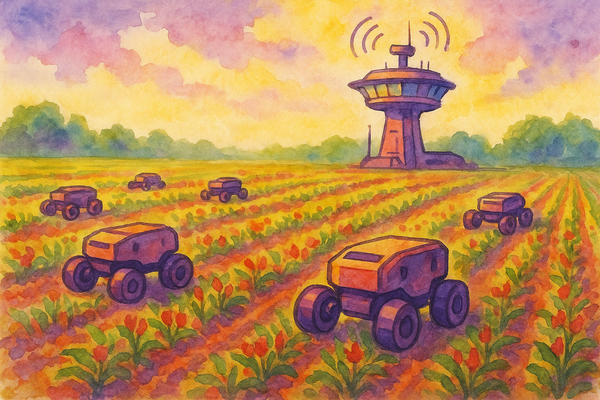
Many of these autonomous technologies are being developed within California, but often are deployed in other US states and around the world. If one looks at the Crop Robotics Landscape map published by the Mixing Bowl in 2024, there are almost 350 robotics companies, with many of them focused on autonomy and autonomous operations. (see left-most column in the landscape map)
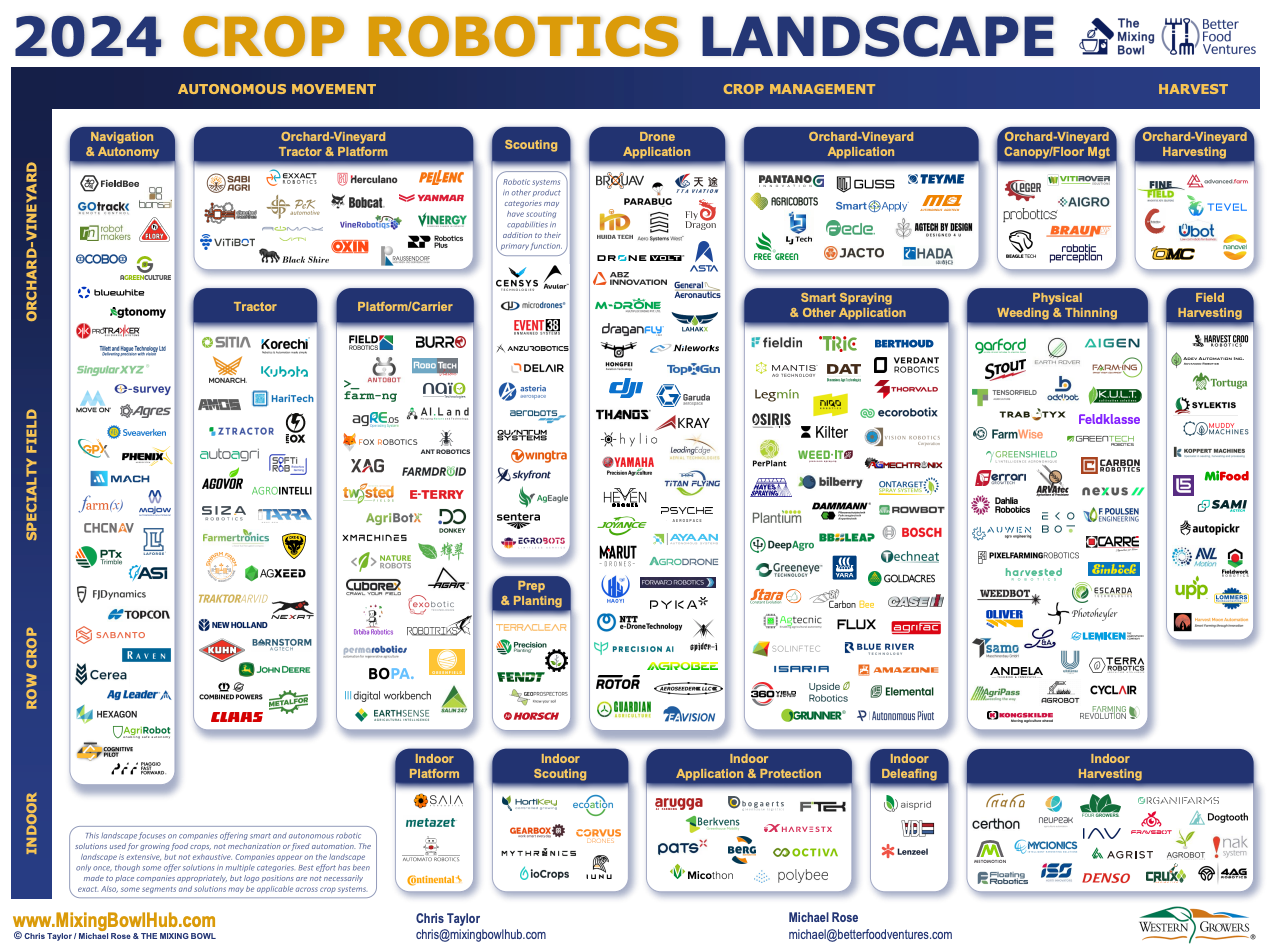
Image source: Mixing Bowl
As the Mixing Bowl report states, (highlights by me)
The ongoing challenges of labor availability, regulation, and cost continue to affect the sector. At the same time, consumers are increasingly concerned with the healthiness of their food and how sustainably it is grown. Adding to the pressure are expected increases in future demand, climate change impacts, and rising production costs.
It is clear that further mechanization and automation will be essential to keeping the agrifood system productive, profitable and aligned with consumer demand and preference.
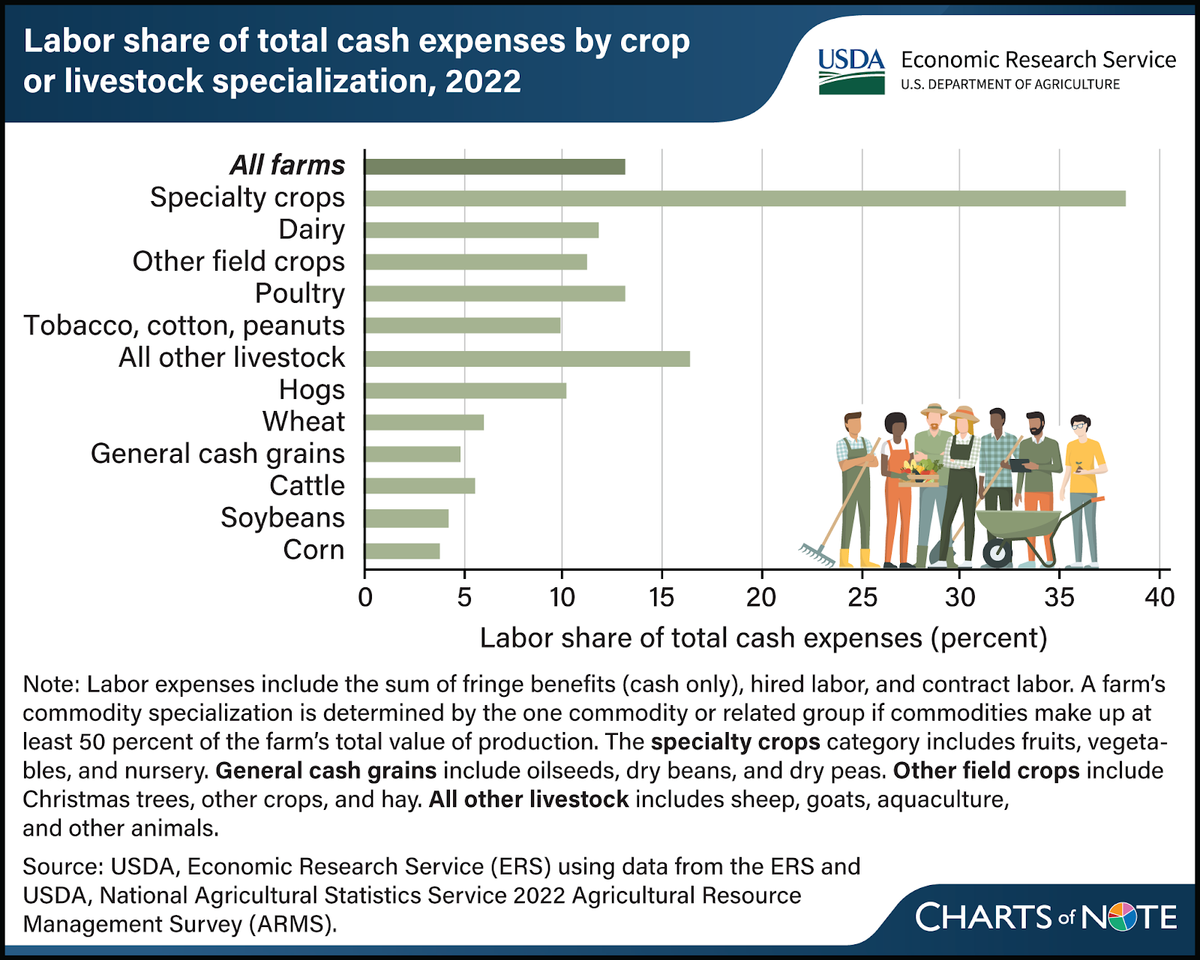
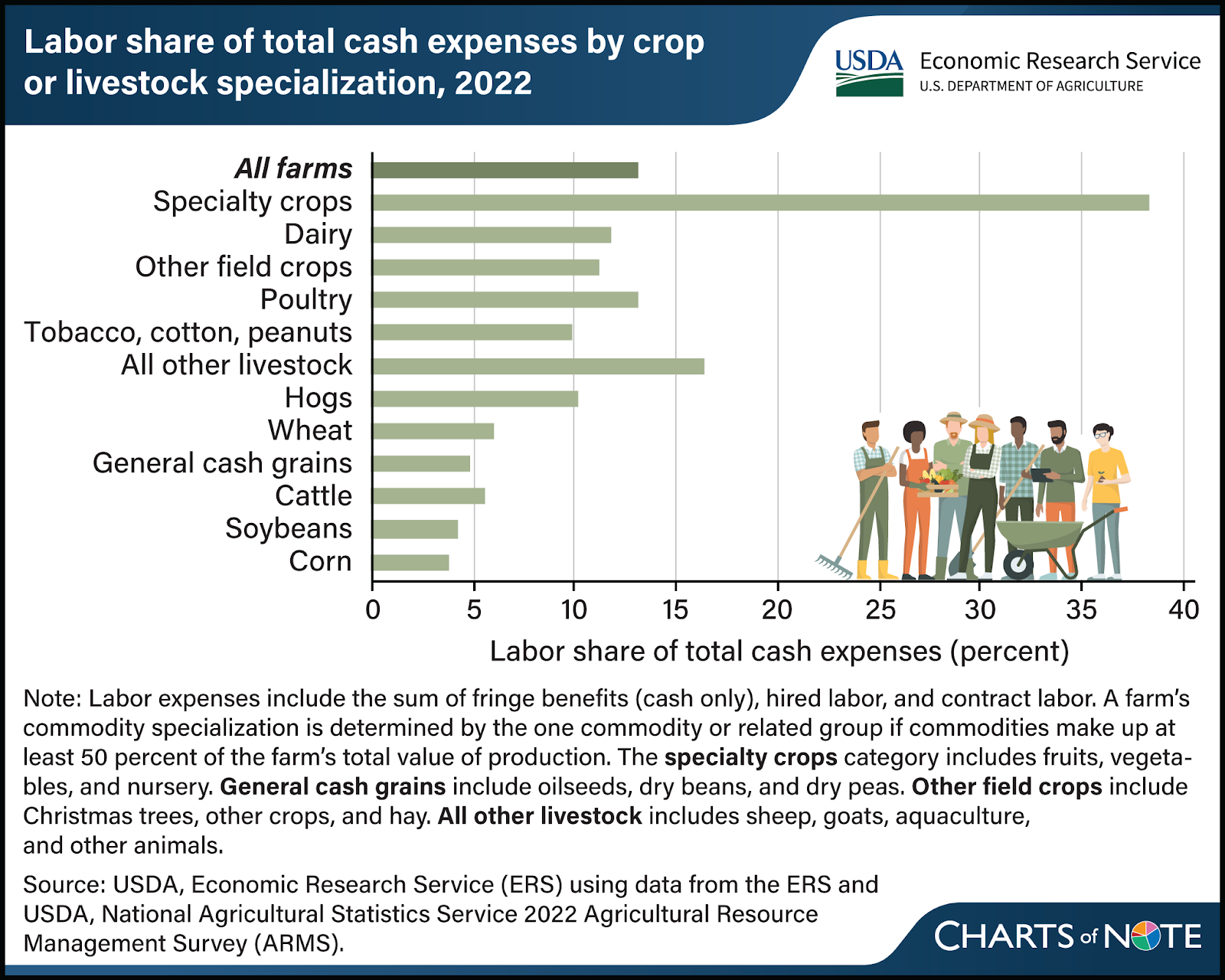
Access to farming labor is a huge challenge in California. In 2023, 54% of farmers reported to have labor availability challenges. The problems are even more acute in California, as most of California crop agriculture involves high value crops like berries, tomatoes, lettuce, tree nuts, etc. which are very human labor heavy.
Many of the farm workers are migrant workers and are heavily impacted by adverse immigration policies. The immigration policies of the current administration are not helping California farmers, who are hobbled by the 1977 regulation and cannot really use autonomous equipment.
Many companies like John Deere, and Monarch Tractor have developed advanced autonomous systems, but the California market remains largely closed to their full potential. The disconnect between a 50 year old regulation and ground realities stifles the within California market. It forces innovators to look to other regions for commercialization. It deprives a critical industry in California of efficiency gains.
California specialty crop farmers are heavily dependent on human labor, while the availability and cost of labor are becoming worse by the day. They have to compete with products grown in other parts of the country and the world.
Payroll costs have gone up from 2002 to 2022 according to research done by the “Assistant Professor of Cooperative Extension in the Department of Ag and Resource Economics at UC Berkeley. Ali Hill used data from the U.S. Census of Agriculture to look at payroll cost trends between 2002 and 2022.
She said that payroll costs in California have increased 244%” without considering inflation, which has increased costs by about 80% in the same period.
The recent regulatory changes are not helping with the labor cost situation.
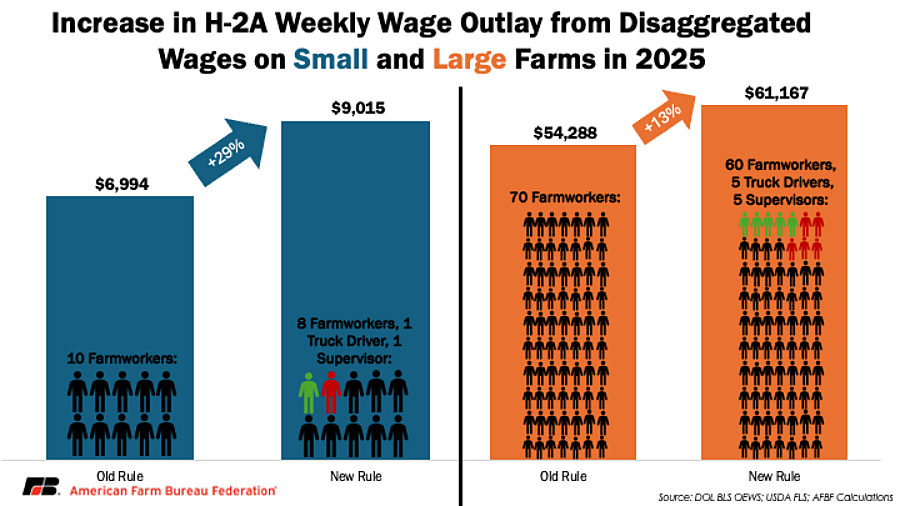
For example, the Department of Labor’s 2023 reclassification of some H-2A workers’ job titles continues to push wages higher, with another increase on the way this year per the Bureau of Labor Statistics 2024. As you can see, the wage changes are having a more significant impact for small farms (on the left) compared to large farms (on the right). The regulation is regressive in nature as it affects the small family farm much more compared to a large corporate farm.
They are showing up to a gun fight with a knife, while one of their hands is tied back, and their eyes are covered with a blindfold.
Just do it
There are many other states in the US which do not have such onerous rules against the use of autonomy. The cautionary principle is harming agriculture in California. It is one of the main reasons why farms are shifting their operations from California to other states, or to a different country altogether.
According to the 2022 Census of Agriculture for California,
Despite its significant contributions to our food system, California agriculture continues to lose land. According to the 2022 Census of Agriculture, the state has experienced a decline of 332,197 acres of agricultural land since the 2017 Census. As of 2022, California has less than 24.2 million acres of land dedicated to agriculture
Many of the acres end up in South America or in land fills. When acres leave the state, it has a significant impact in the rural communities, where farming is the main occupation and source of income.
When it comes to safety of autonomous equipment, businesses and startups developing autonomous vehicles have the incentive to build safe and reliable technology for their customers.
What California needs to do is to imitate and follow the simple path taken by states which are not California. California should repeal the rule (Title 8, Section 3441(b)), so that their farmers have a better chance at competing in the US and global market.
If it is safe to tap your screen, summon a Waymo, and navigate the up and down streets of San Francisco with many pedestrians, then it should be safe to have autonomous farming equipment in California.